
Pick five template cards, feed them the same photo, and you will learn more in ten minutes than a month of reading descriptions teaches you. The same face comes back five different ways — one card keeps it, one changes the room, one changes the pose, one changes the mood — and the differences are the whole lesson. A template is not a filter. It is a decision about what matters in the photo.
Hurtig dom: Run one photo through five cards before you commit to any of them, compare the same four things every time — the face, posen, miljøet, and the light — and pick the card whose changes match what the photo needs, because one photo, five cards, and the card that wins is the one that fits the photo, not the one with the prettiest preview.
Contents:
- The one-sentence version
- The setup: et foto, five cards, same rules
- Cards one and two: what changes first
- Cards three and four: where the face holds
- Card five: the one that fits this photo best
- How to pick the right card before you pay
- Running the same test on your own photo
- What five cards cost
- What the test cannot tell you
- Consent and the rules
- Endelig dom
- FAQ
| Card type | What it changes most | Best for this photo |
|---|---|---|
| Portrait card | Almost nothing — keeps the face | A strong face, plain background |
| Scene card | The room and the light | A flat or boring background |
| Pose card | The body and the framing | A stiff or awkward pose |
| Style card | The mood and the colour | A photo that needs atmosphere |
| Motion card (video) | Everything moves — 5 or 8 sekunder | A photo that wants to move |
1. The one-sentence version
A template card is a recipe: the same input, den samme foto, cooked five different ways. The test is simple — one photo, five cards, and the same four questions for each result: did the face survive, did the pose improve, did the setting help, and does the light still make sense? The card that wins is the one that changes what needed changing and leaves alone what was already good. Everything else in this guide is the detail of how to run that comparison without wasting credits.
2. The setup: et foto, five cards, same rules
Choose the photo first, and choose it honestly. The test photo should be the kind of photo you actually use: a clear face, facing the camera, in normal light, with nothing unusual about it. A test photo that is already perfect teaches you nothing, because every card will return something good. A test photo with a real weakness — a flat background, a stiff pose, dull light — teaches you everything, because the cards will disagree about how to fix it, and the disagreement is the information.
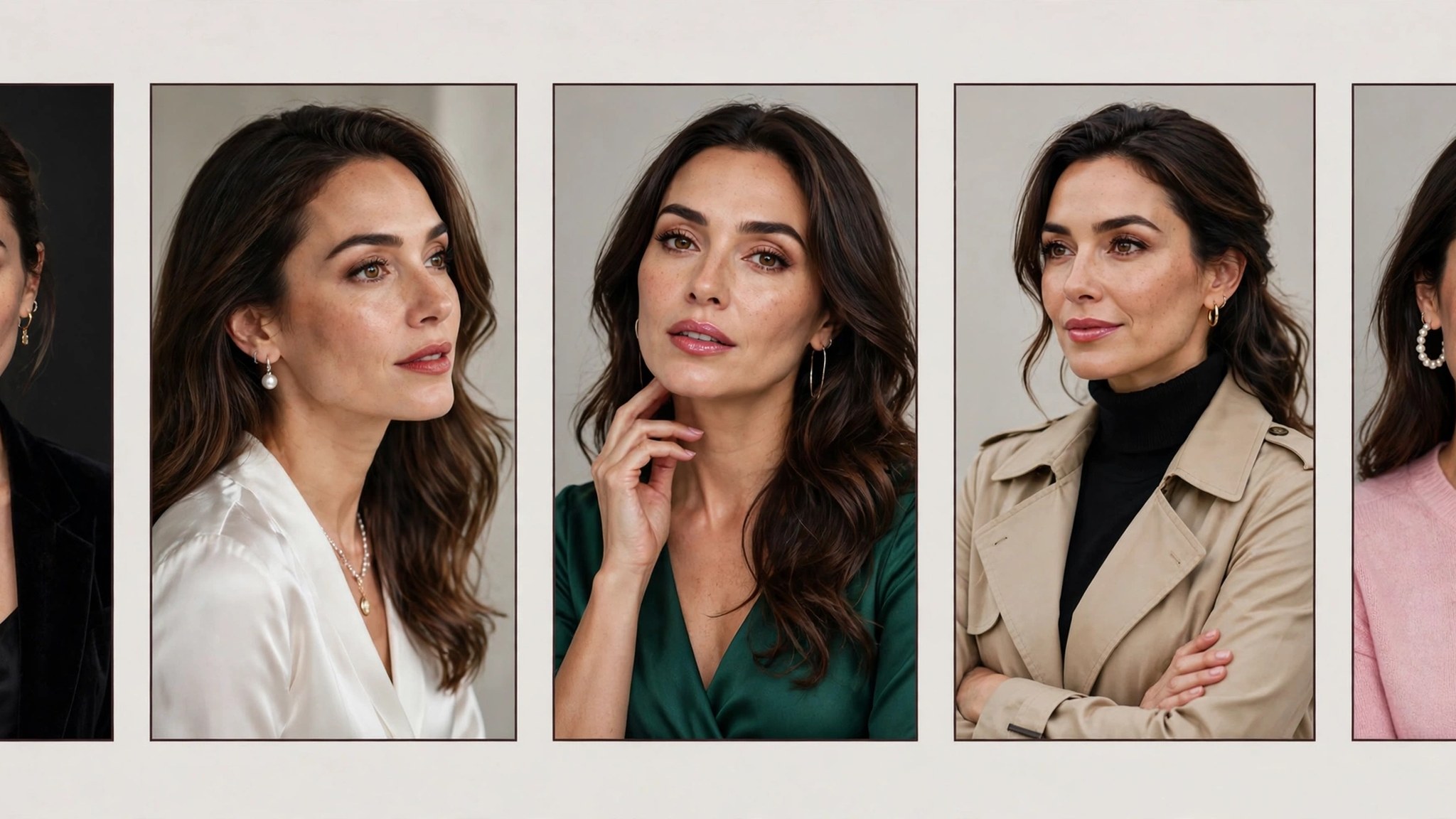
Pick five cards that are genuinely different: a portrait card that changes almost nothing, a scene card that rebuilds the room, a pose card that reframes the body, a style card that changes the mood, and a motion card that turns the still into a clip. Five similar cards teach you nothing, because they will return five similar results. Run the five cards with the same rules — same photo, no edits between runs — and judge the results side by side at the same size. If you change the input between cards, you are testing two variables at once, and the comparison is worthless.
3. Cards one and two: what changes first
The portrait card changes the least, and that is its strength. It keeps the face, keeps the pose, keeps the setting, and polishes what is already there — cleaner skin, steadier light, a sharper eye. If your photo is already strong, the portrait card is often the winner, because it does not risk what is already good. Its failure mode is boredom: a flat photo stays flat, and the card will not save it. Judge the portrait card by the face. If the face is the same face, only better, the card did its job.
The scene card changes the most, and that is its risk. It rebuilds the room, lyset, and the background, and it can turn a photo taken against a blank wall into a photo taken in a warm room with evening light. The gain is atmosphere. The cost is identity: the more the scene changes, the more the face has to survive the change, and faces sometimes do not. Judge the scene card by the background first and the face second. If the room is beautiful and the face is still yours, the card earned its price. If the room is beautiful and the face is a stranger, the card failed, however pretty the room is.
4. Cards three and four: where the face holds
The pose card reframes the body. It takes a stiff standing photo and gives it a lean, a turn, or a seated position, and the change can be dramatic, because pose is the first thing the eye reads after the face. The risk is anatomy: a new pose means new arms, new hands, and a new relationship between the body and the room, and each of those is a place for the model to go wrong. Judge the pose card by the hands and the shoulders. If the hands are plausible and the shoulders sit naturally, the pose works. If the hands are wrong, nothing else about the card matters.
The style card changes the mood. It takes the same face and the same pose and returns them in a different colour, a different light, and a different feeling — warmer, cooler, softer, more dramatic. Judge the style card by whether the mood fits the face: a warm, soft style on a serious face can look wrong, and a dramatic style on a gentle face can look like a costume. Cards three and four are where the face test matters most, because both move something the face depends on — the pose changes the angle of the face, and the style changes the light on it. Compare the face across all five results: the card whose face looks most like the input photo is the card that respected the input.
5. Card five: the one that fits this photo best
The motion card is a different kind of test, because it does not return a picture. It returns a clip — five seconds or eight seconds — and the question changes from “does this look right” “does this move right”. A photo that is perfect as a still can fail as a clip, because movement exposes everything a still can hide: a hand that does not quite touch, a shoulder that does not quite connect, a face that does not quite hold its shape when it turns. Judge the motion card by the first second and the last second: the first should look like the photo you fed it, and the last should look like the same person, in the same place, having done something plausible in between.
If the person or the room changes halfway through, or the movement is a slow drift that goes nowhere, the card did not fit this photo, however smooth the motion looks. Smoothness is not the test. Continuity is. For the test photo in this guide — a clear face, a flat background, a stiff pose — the card that fits best is the scene card, because the photo’s weakness is the background, and the scene card is the only one that fixes the background without risking the face. The pose card is second. The portrait card is safe but boring, the style card is a garnish, and the motion card is a luxury: beautiful if the still is already good, wasted if it is not.
6. How to pick the right card before you pay
Read the preview like a critic, not a customer. Five signs tell you whether a card is worth its price. First, the face in the preview: is it clear, facing the camera, and detailed, or is it turned away, blurred, or hidden? A card that hides the face in its own preview is a card that cannot keep a face. Second, the before and after: does the preview show the input photo next to the result, or only the result? A card that shows only the result is asking you to trust it. Third, the background: is it a real place with real light, or a smooth gradient with nothing in it? Cards with empty backgrounds are hiding the fact that they cannot build a room.
Fourth, the hands: are they visible, and are they plausible? A preview that crops out the hands is a preview that knows its hands are weak. Fifth, the variety: does the card show more than one example, and do the examples look like different people or the same person in different cards? Et eksempel er et løfte. Three examples are evidence. Apply the five signs before you run the test: a card that fails two of them is not worth 49 credits.
7. Running the same test on your own photo
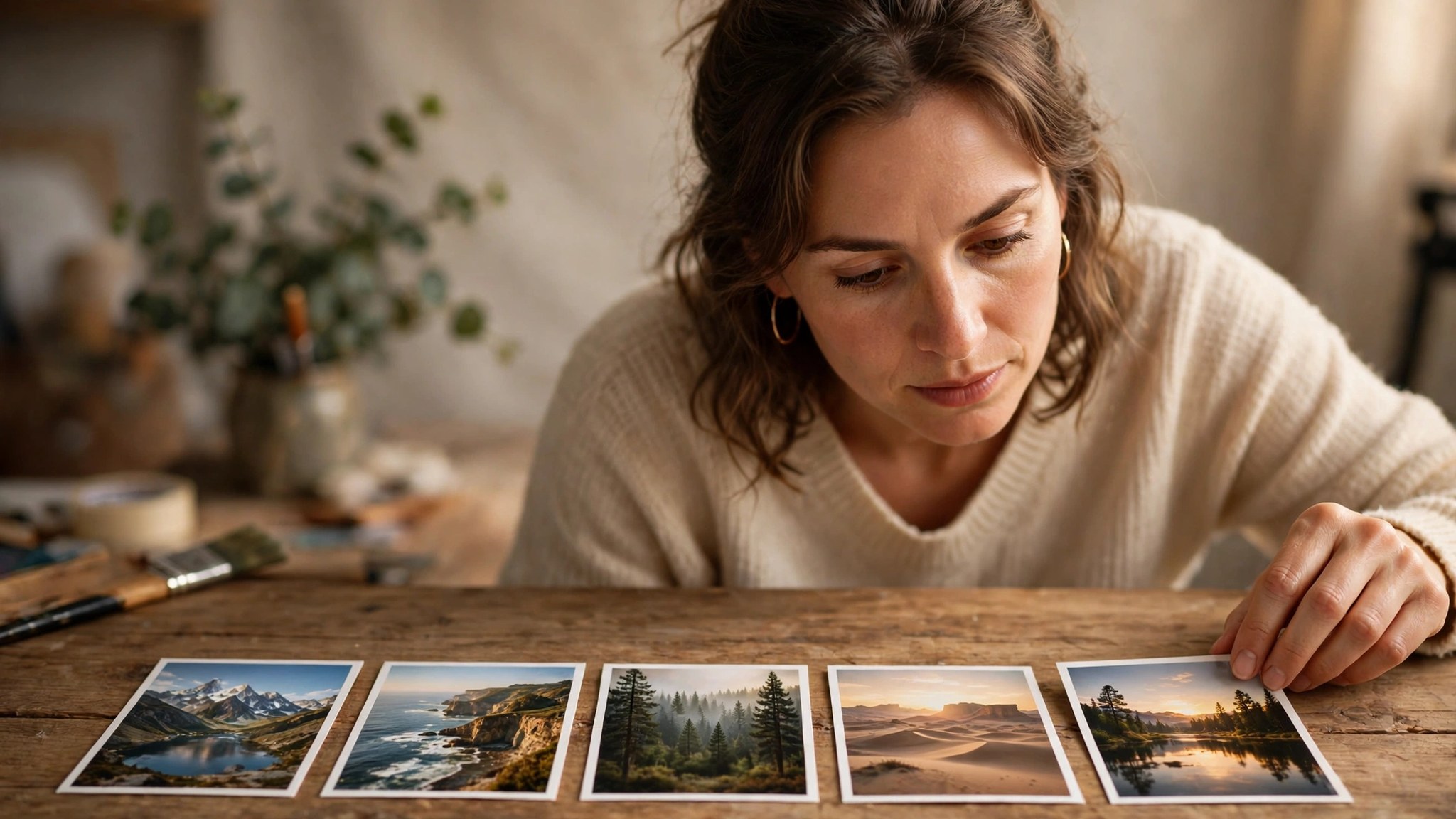
Take your own photo and run the same test: five cards, same rules, four questions per result. Start with the cheapest cards, the image cards at 49 credits each, and run the motion card last, because it costs the most and teaches you the least until the stills are already good. Write down one line per card: what it changed, what it kept, and whether the face survived. Five lines, five minutes, and the comparison is yours.
Then pick a winner and run it again on a second photo. A card that wins once might have been lucky. A card that wins twice is a card that fits the way you shoot. Keep a list of the cards that win for you, with the kind of photo each one fits — portrait card for strong faces, scene card for flat backgrounds, pose card for stiff poses — because the list is the shortcut next time. And when a card loses, write down why. “Lost: face drifted” is a line that saves you 49 credits the next time you are tempted by the same card.
What five cards cost
Priser tjekket 13 Nov 2026. An image template card costs 49 credits, about $0.98 $19.99 pakke (1000 credits, $0.020 a credit) and about $0.59 $59.99 pakke (5000 credits, $0.012 a credit). Five image cards cost 245 credits, about $4.90 and about $2.94. A video template card costs 351 Credits for 5 sekunder, about $7.02 and about $4.21, 561 Credits for 8 sekunder, about $11.22 and about $6.73. Five 5-second video cards cost 1,755 credits, about $35.10 and about $21.06, and five 8-second cards cost 2,805 credits, about $56.10 and about $33.66.
That is why the order matters. Run the five image cards first, 245 credits, and only run the motion card when the stills have told you which photo deserves to move. A test still costs 6 credits, about $0.12 and about $0.07, and it is the cheapest way to check whether a photo is ready for any card. Packs: $19.99 1000 credits and $59.99 5000, paid once and credited immediately; annual packs $119.88 $359.88, paid once and issued monthly over 12 months.
What the test cannot tell you
The test cannot tell you which card is best in general. It can only tell you which card is best for this photo, because the winner depends on the photo’s weakness, and the next photo will have a different weakness. A card that wins today can lose tomorrow on a different face, a different pose, or a different room. The test is a method, not a ranking.
The test cannot tell you what the card will do to a photo it has never seen, and it cannot replace looking. Five cards on one photo teach you about those five cards on that photo — not about a sixth card, or about the same five cards on a photo with different light. And if a result looks wrong and you cannot say which question it failed, trust the feeling and run the card again. The feeling is usually right, and the framework is there to help you explain it, not to overrule it.
Consent and the rules
Generer kun billeder af dig selv, or of a consenting adult who has agreed to this specific use. A template card does not create permission, and running someone else’s photo through five cards is still running someone else’s photo. Everyone in every image must be a fictional adult or a real consenting adult aged 18 or older. When in doubt, the answer is no.
Endelig dom
Et foto, five cards, same rules, four questions per result — and the winner is the card that changes what needed changing and leaves alone what was already good. Run the image cards before the motion card, read the preview with the five signs before you pay, and write down what each card did. The next photo will thank you.
FAQ
How much does it cost to test five cards?
Five image cards cost 245 credits, about $4.90 and about $2.94. Five 5-second video cards cost 1,755 credits, about $35.10 and about $21.06. Run the image cards first.
Which card usually wins?
There is no usual winner. The card that wins is the one that fixes the photo’s actual weakness: the scene card for a flat background, the pose card for a stiff pose, the portrait card for a photo that is already strong.
How do I read a template preview?
Fem tegn: a clear face facing the camera, a before-and-after pair, a real background with real light, visible plausible hands, and more than one example. A card that fails two signs is not worth 49 credits.
Should I test video cards too?
Only after the stills. A video card costs 351 Credits for 5 seconds and 561 8 sekunder, and movement exposes every weakness a still can hide. Test the still first, then let the winner move.
What if all five cards fail?
Then the photo is the problem, not the cards. Take a better input: a clear face, facing the camera, in normal light. No card can save a photo that does not show the face clearly.
How do I keep the results of a test?
Write one line per card: what it changed, what it kept, and whether the face survived. Five lines, five minutes, and the next choice starts from evidence instead of a pretty preview.
Læs videre: When Your Card Stops Working: Why Templates Break and How to Fix Them · Build Your Own Card: Turning a Winning Prompt Into a Reusable Template · Outgrowing the Card: When to Stop Using Templates and Generate From Scratch